Marks have become everything. Watch any parent receive a report card. They scan straight to the percentages. 95% brings celebration. But can their daughter actually talk to people comfortably?That question rarely gets asked.Schools chase board result rankings. Student interaction skills? Those get ignored almost entirely. Nobody's saying academics don't count. They obviously do. What I'm saying is we've lost something vital by making exams the sole yardstick. Your daughter might dominate Mathematics. Put her in front of a group to present though, and she falters. Your son aces every Science paper. Interviews for university places? He freezes completely. Talk to university admissions officers. Speak with employers hiring graduates. They're seeing a worrying pattern. Students arrive with transcripts that look phenomenal. Working in teams? They struggle badly. Their essays shine.Face-to-face conversations? They stumble through them awkwardly. At Sparsh International School, this pattern has played out enough times now. Something needs addressing. Real education prepares students for life beyond examination rooms. Social abilities matter as much as academic ones.
Being the loudest in the room isn't what we're after. Popularity contests don't interest us either. What matters is whether students can communicate effectively with different types of people. Proper listening means more than just waiting for your turn. Reading situations accurately takes practice. Someone's uncomfortable—can you tell? Should you press your point now or hold back? These sound straightforward. Then you realise how many adults never learnt them.
At SIS we've identified what actually counts. Collaboration means getting work done with people whose personalities clash with yours. Empathy requires understanding viewpoints completely unlike your own. Presentation skills—these really only boil down to one simple thing. It's the capacity for children to be able to talk about their thinking with a certain amount of self-assurance, irrespective of who happens to be sitting and listening to them. That confidence is what truly counts. Traditional report cards ignore all of this. Career success depends on these capabilities far more than whether you scored well in History or Geography.
Schools often still run like they did in the previous era. Rows of silent students. Individual work gets measured and rewarded constantly. Group activities happen sometimes. What does this produce? Brilliant test-takers. Not necessarily capable professionals. Students who collaborate naturally might score less today. But check back five years after graduation. They're managing teams, while it could be likely that those with higher scorers struggle with basic workplace dynamics.
Exam pressure kills social development actively. Every conversation feels like time stolen from revision. Parents reinforce this without realising. Your child wants to see friends? Better study instead. Debate club sounds interesting? Mathematics tuition seems more important. Each decision makes sense alone, but together they create socially stunted graduates.
Ask any hiring manager what matters. Academic records count for getting through the door. After that? Social capabilities determine everything. Can they handle angry clients? Will they work across departments smoothly? Do they communicate appropriately with both bosses and juniors? Companies now assess these qualities extensively during hiring. Technical knowledge can be taught in months. Social intelligence takes years to develop.
Remote work makes this even harder. Building relationships through screens demands stronger skills than office environments ever did. One needs to understand tone and intent from reading emails alone, create trust without casual hallway chats. Your child faces these challenges whether we prepare them or not. Practising now beats scrambling later when careers hang in the balance.
Group projects form major portions of subject assessments. Individual brilliance alone doesn't cut it anymore. Students must coordinate. They delegate. They support teammates even when personalities clash. Does this sometimes lower individual scores? Probably. Does it produce better-prepared graduates? Without question. We track alumni carefully. Those with strong collaborative skills outperform pure academic stars consistently over time.
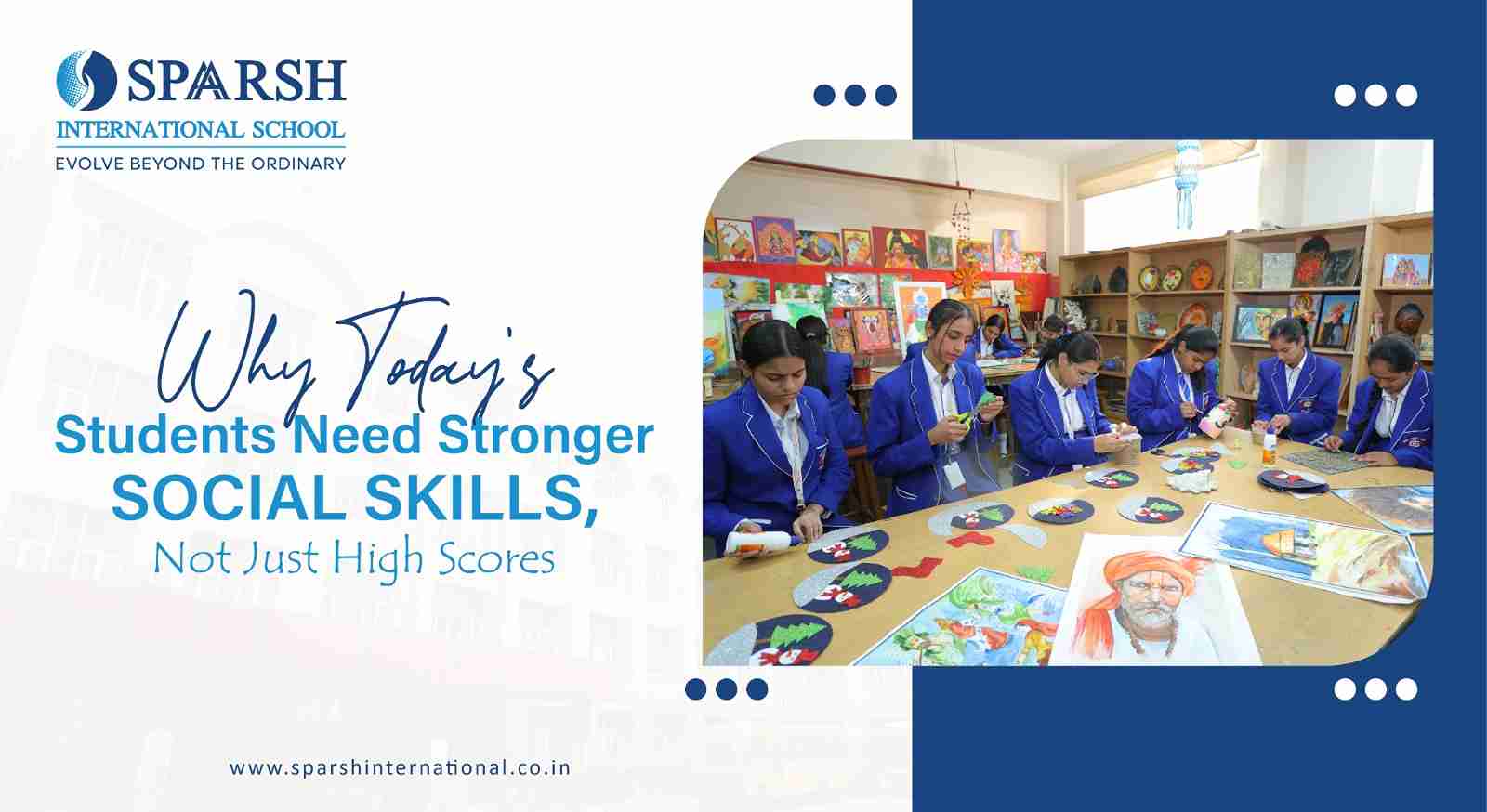
Every subject requires presentations now. Science students explain experiments to classmates. English students analyse literature for their peers. Mathematics students teach difficult concepts to others. Most people fear public speaking intensely. Regular practice changes that. By graduation, SIS students find standing before groups normal rather than terrifying.
We teach conflict resolution explicitly. Students learn frameworks for handling disagreements. It appears to be absolutely vital that we create spaces for them to rehearse those particularly challenging discussions within an environment that is safe. When they collaborate on tasks in groups, quite naturally, real instances of disagreement simply emerge. Rather than resorting to the simple route of penalising everyone who was involved, our focus is instead to act as a proper guide towards a resolution. This genuine learning of how to negotiate and the art of compromise is embedded through the actual, messy process of practice itself.
We must talk about what truly matters. The grades. They are, after all, a representation of effort and knowledge acquisition. However, it's about finding the appropriate equilibrium between what's achieved academically and the necessary, essential development of their social being. Universities still look at academic records heavily during admissions.
Here what we argue against is exclusive focus on scores. That damages students ultimately. Ideal graduates possess strong academics and developed social capabilities. This requires deliberate work from both schools and families. At Sparsh International School, we've found this balance actually works. Academic standards didn't drop. Results stay strong. Students also leave school, feeling confident in groups and capable of real collaboration.
Parents must support this actively. Your daughter wants drama despite exam pressure? Encourage it. Your son organises class events instead of revising? Recognise that as valuable development. These experiences build capabilities that textbooks never teach. Twenty years from now, employment success depends far more on these skills than whether he scored 70% or 90% in Class 10.
Assessment needs rethinking fundamentally. Marks alone capture nothing comprehensive about student development. At SIS we introduced broader evaluation frameworks. Teachers assess collaborative contributions. Communication development gets observed systematically. Students receive feedback on empathy and leadership alongside academic marks. Report cards include these dimensions explicitly. This signals to both students and parents that these capabilities matter equally.
Some parents resist initially. They succeeded through traditional academic routes themselves. Why change what worked? Because the workplace your children enter differs completely from yours. Globalisation dominates. Remote work is standard. Team structures rule everything. Success requires different capabilities entirely. We're preparing students for their future, not recreating our past.
We must collectively accept that education has to expand its horizon, moving decisively past the simple notion of being merely an 'examination factory'. Our students truly require a complete kind of personal growth—one that ensures their social capabilities are afforded a prominent position in their learning. Now, this approach doesn't, in any way, weaken academic rigour, we must understand; rather, it appropriately places the academic learning within its proper context.
The truth of the matter is quite simple: your child’s lifelong achievements will be determined far more significantly by their capacity to collaborate effectively, to communicate their ideas persuasively and to navigate complex social situations, than they ever will be by a few marginal percentage points on a final transcript.
At Sparsh International School CBSE School in Greater Noida, we are committed to seeing that both these dimensions are deliberately cultivated. However, we absolutely need parents to actively support this vision. It is together that we genuinely prepare young people who possess the wherewithal to thrive in life, not merely achieve high marks on the mandatory assessments.
Que.1) Won't focusing on social skills distract my child from academics and lower their exam scores?
Ans) Research shows the opposite actually occurs. Students with strong social skills often perform better academically because they collaborate effectively on projects, seek help when needed and manage stress through peer support. At SIS we've found that developing these capabilities alongside academics produces more resilient learners. They handle pressure better. They recover from setbacks faster. The time invested in social development pays dividends academically as well. Your child isn't choosing between high scores and social capabilities. Strong social skills support academic success rather than undermining it.
Que.2) How can I help develop my child's social skills at home when academic pressure is already so intense?
Ans) Start small rather than adding major committments. Family dinners where everyone shares their day builds communication habits. Let your child invite friends over regularly. Encourage them to resolve minor conflicts with siblings independently rather than intervening immediately. Support participation in one extracurricular activity even during exam periods. These don't require hours daily. Twenty minutes of genuine family conversation builds more social capability than another hour of revision often does. View social development as essential preparation, not optional extras competing with academics.
Que.3) Why are social skills important for students today?
Ans) Social skills help students communicate clearly, work effectively in teams, solve conflicts, and build meaningful relationships. These skills improve classroom learning and prepare children for higher education, future careers, and everyday life.
Que.4) How does public speaking help students?
Ans) Presentations and public speaking activities help students become more confident, express their ideas clearly, and communicate with different audiences.
From Stress to Strength Promoting Mental Health in the Classroom
Parent's Checklist: Finding the Perfect School in Greater Noida
Creating a Supportive Environment Understanding the Role of Counsellors in CBSE Schools
Importance of Education for All Round Development of Children
Positive and Negative Effects of Social Media on Education
Fostering Critical Thinking Skills in CBSE Classrooms