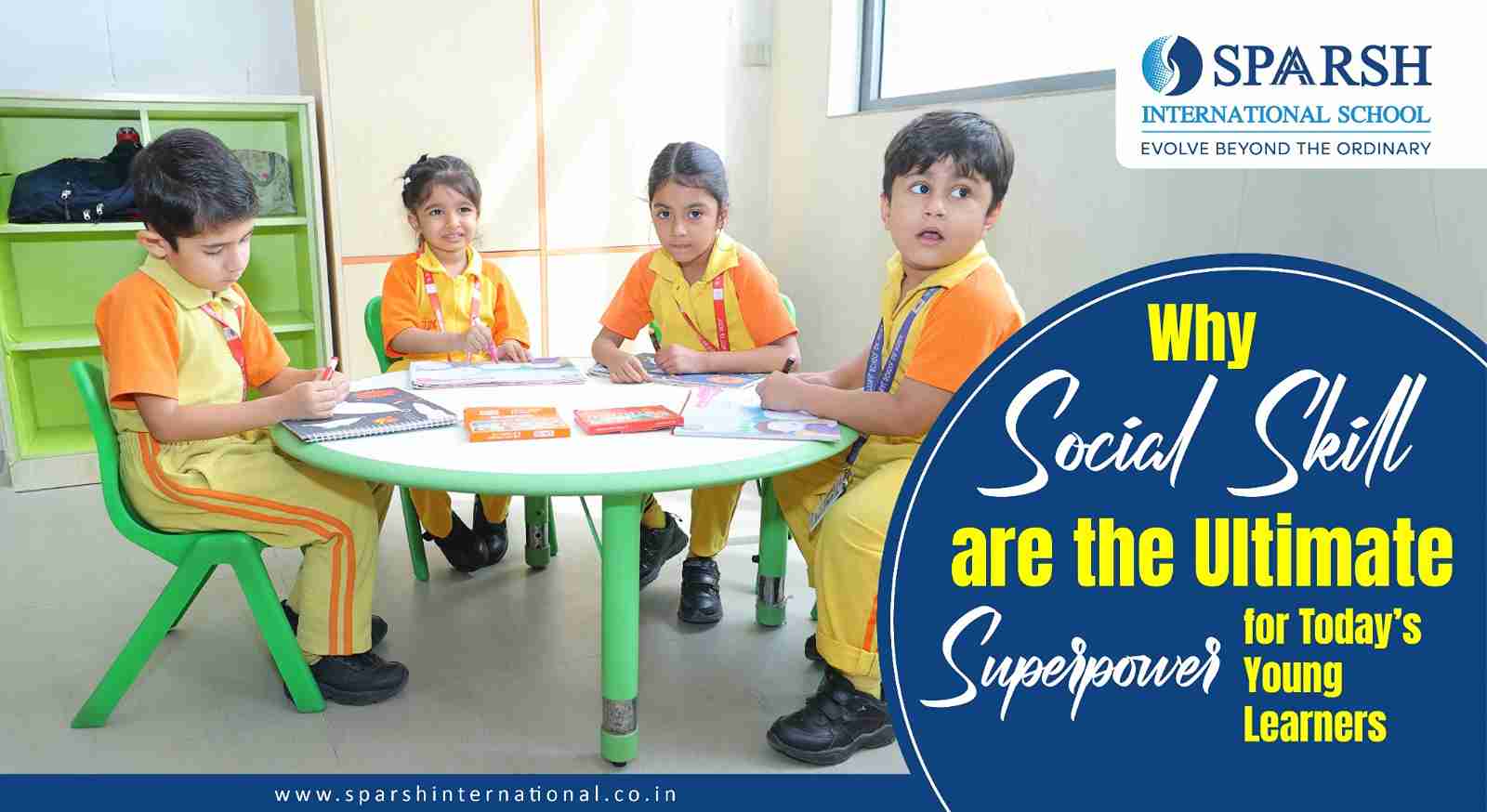
We live in strange times. Children can order food, book rides and even attend school through screens. Technology has brought convenience, but it's also created a generation that sometimes struggles with the basics of human interaction. We've seen parents worry about their child's marks in Mathematics and Science. Those concerns are valid. However, we'd argue that something equally critical often gets overlooked - social skills.
Look at the successful people you know personally. The ones doing well weren't always top of their class. Many of them simply understood how to talk to people, work alongside others and build proper relationships. Connecting with someone. Reading a room. Contributing to a team without causing friction. We used to call these soft skills. Now they're what keeps you employed. Your child could be brilliant at coding or score perfectly in every exam, but that means surprisingly little if they can't hold a proper conversation or work with other people. It's uncomfortable to admit, but true.
The workplace your child will enter looks nothing like the one you or I joined. Automation handles routine tasks. What employers desperately seek are individuals who can lead projects, resolve conflicts and inspire teams. Technical knowledge matters, but social intelligence matters more. Schools that recognise this truth are already shifting their approach.
Social skills determine whether your child will lead or follow. It's really as simple as that.
Children who develop strong interpersonal abilities early on handle rejection better. They bounce back from failures faster. They negotiate their needs without aggression. These aren't abstract benefits. Research consistently shows that students with developed social competencies perform better academically too. Why? Because learning itself is collaborative. Group projects, peer discussions, presentations – education today requires constant interaction.
At Sparsh International School, we see this daily. Students who communicate confidently ask more questions. They seek help when stuck. They form study groups naturally. Their learning accelerates not despite their social skills, but because of them.
Most schools still operate on a model designed for the industrial age. Sit quietly. Memorise facts. Take tests alone. That approach worked when jobs required following instructions and completing repetitive tasks. What today demands is completely different.
Your child will need to:
No textbook teaches this. Practice does. Feedback does. Everyday dealing with other humans does.
Schools that take this seriously don't leave social development to chance. Hoping children work it out during lunch break isn't a strategy. Deliberate approaches get results.
Collaborative learning spaces push teamwork naturally. Students tackling difficult problems together have to listen. They compromise. They start seeing value in perspectives different from their own. Drama and debate do something important for confidence. Most adults fear public speaking. Children fear it even more. Get them doing it early and that fear disappears.
Sports matter beyond fitness. Winning gracefully is harder than it sounds. So is losing with dignity. Team activities show children that individual brilliance means little without coordination. At SIS, we've integrated social-emotional learning across subjects. A Science experiment becomes a lesson in patience when results don't match predictions. A History project teaches empathy when students explore different cultural viewpoints.
Peer mentoring programmes connect older students with younger ones. This builds leadership skills in mentors whilst giving younger children relatable role models. House systems create communities within larger school populations. Children learn loyalty, collaboration and healthy competition simultaneously.
School efforts only work when reinforced at home. You can't outsource character development entirely. Start with family meals without devices. Conversation skills need practice. Ask open-ended questions about your child's day. Really listen to their answers. Model the behaviour you want to see. When you handle disagreements calmly or admit mistakes gracefully, your child absorbs those patterns.
Encourage friendships beyond your social circle. Different backgrounds teach adaptability. Let your child host friends occasionally. Having friends over teaches hosting skills they'll need their whole lives.
Cut screen time, but do it thoughtfully. Not because technology is evil, but because every hour spent online is an hour not spent practising face-to-face interaction. This balance matters more than you might realise.
The future belongs to children who can do more than solve equations or memorise dates. The future belongs to children who build real connections, influence people in positive ways and bridge differences to achieve something together.
SIS stays focused on developing students who succeed academically and socially. As a leading CBSE school in Greater Noida, preparing children for tomorrow means giving them skills that matter beyond any single subject. Your child will leave Sparsh International School with more than certificates—they will have the confidence to succeed wherever they go. Social skills aren’t just another item on the curriculum; they are the foundation upon which everything else is built.
Ans: Watch how they handle conflicts with siblings or friends. Observe whether they can start conversations with unfamiliar adults or join new groups comfortably. Strong social skills show up in their ability to read situations, adjust their behaviour accordingly and maintain friendships over time. If your child struggles with these areas, don't panic. Social abilities can be developed at any age through consistent practice and guidance.
Ans: Social learning begins the moment children interact with others. Even preschoolers benefit from structured social activities. However, the approach must match developmental stages. Younger children need help with basics like sharing and taking turns. Older students tackle complex skills such as conflict resolution and leadership. The key is continuous development throughout their schooling, not treating it as a separate subject introduced at a particular age.
Ans: Social skills help students communicate effectively, work in teams, solve conflicts, build relationships, and develop confidence. These abilities are essential for academic success, higher education, future careers, and everyday life.
From Stress to Strength Promoting Mental Health in the Classroom
Parent's Checklist: Finding the Perfect School in Greater Noida
Creating a Supportive Environment Understanding the Role of Counsellors in CBSE Schools
Importance of Education for All Round Development of Children
Positive and Negative Effects of Social Media on Education
Fostering Critical Thinking Skills in CBSE Classrooms