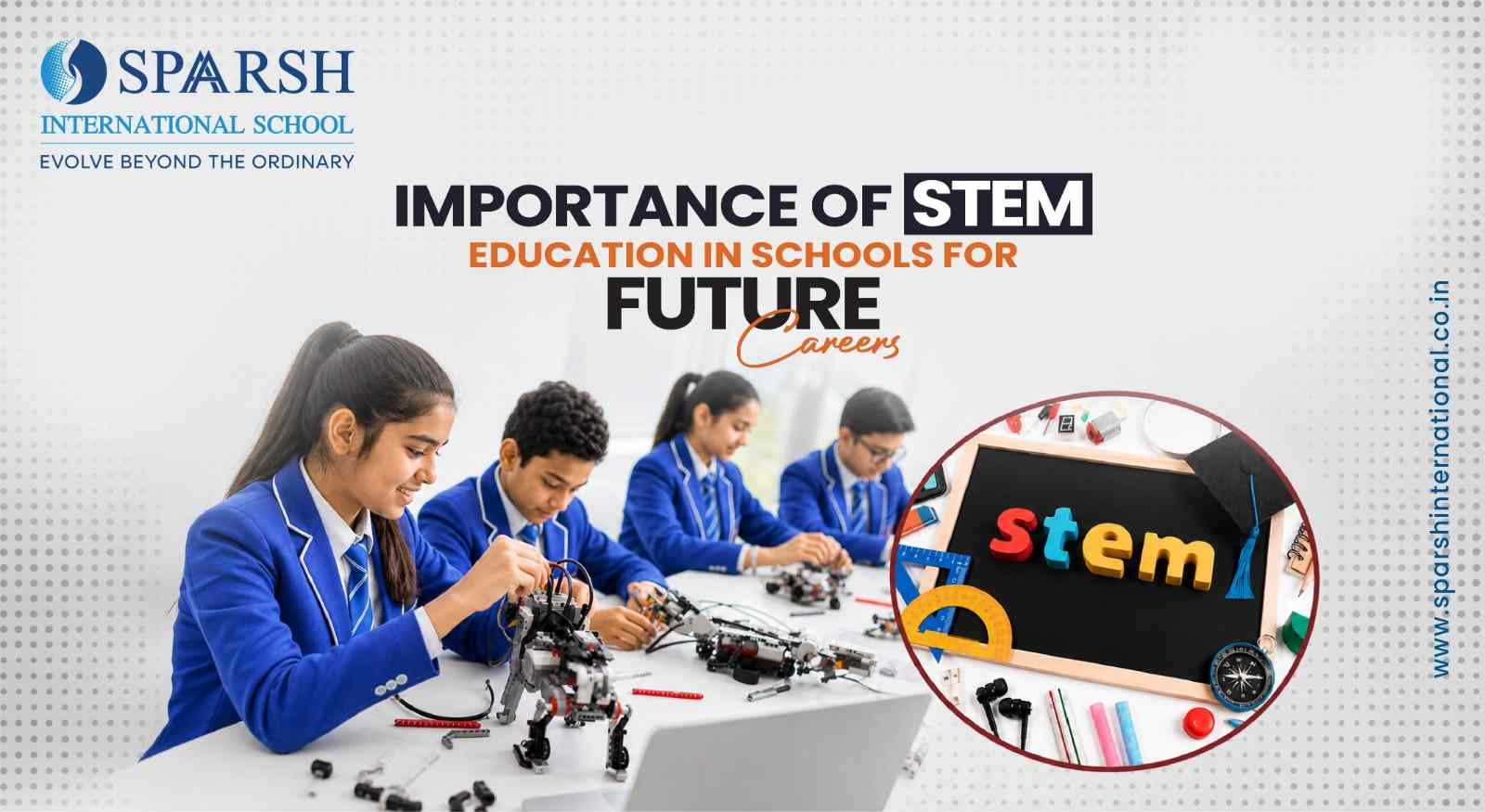
The world children now grow up in does not resemble the one their parents did. Advancements in automation, artificial intelligence, climate, data science, and other areas of technology are redefining every industry, faster than people can keep up with. With this reality, STEM education in schools becomes an essential component of preparation for careers in the future.
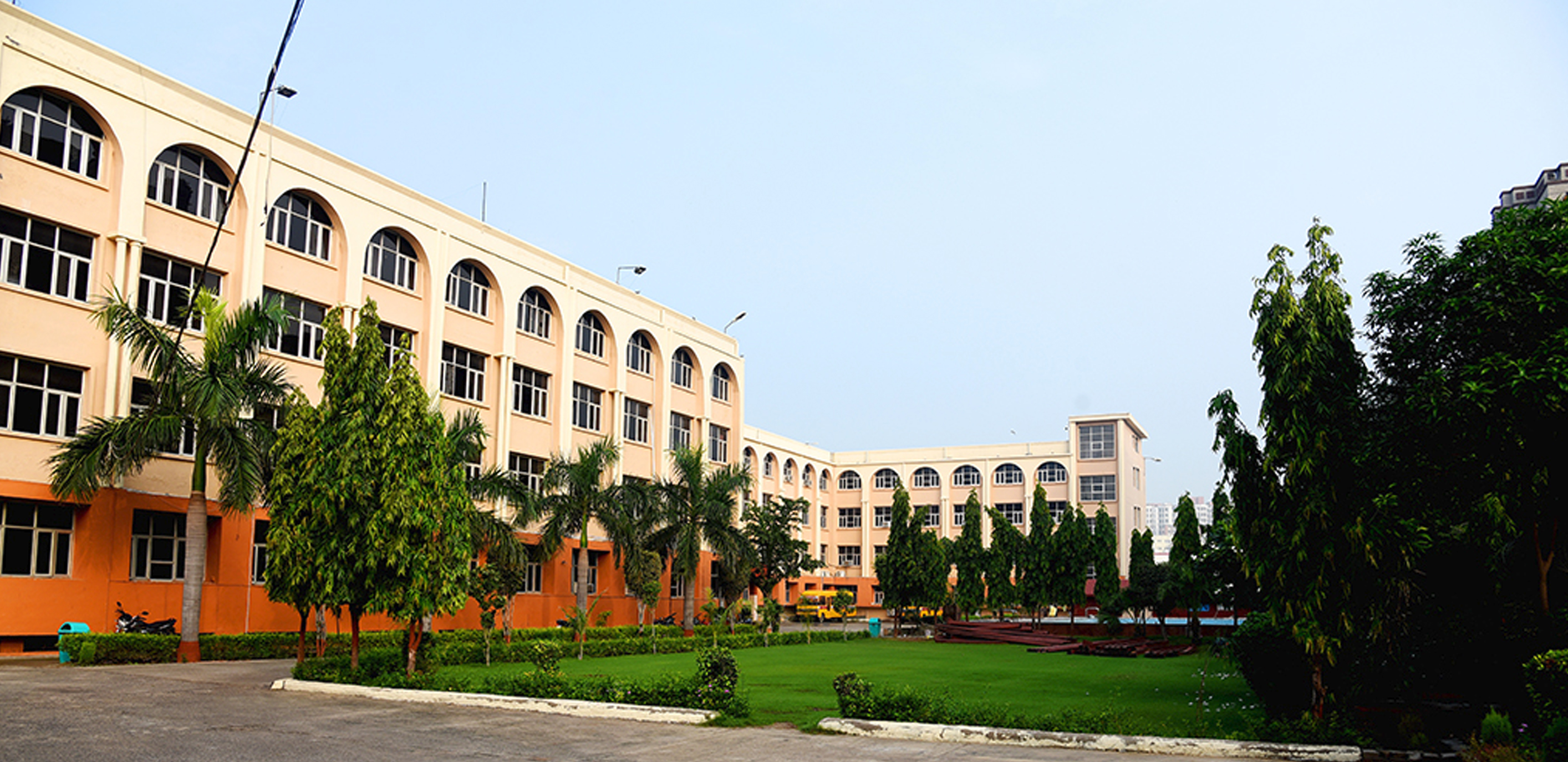
Schools that recognise this early and act on it are giving their students a decisive advantage. Sparsh International School in Greater Noida is an example of such an establishment where STEM thinking is infused throughout the curriculum and other aspects of schooling.
STEM stands for Science, Technology, Engineering, and Mathematics. The primary purpose of STEM learning in schools is moving from theory to practice. STEM promotes holistic learning approach, where the acquired knowledge is applied to solving real problems. Through instilling curiosity and a "growth mindset" into students, schools can enable them to evolve and progress beyond what they could have achieved otherwise.
An essential benefit of STEM learning in schools is the development of a person's native wisdom and imagination. With such a focus put on learning to use "Design Thinking" and "Entrepreneurship" in the Competency wing of the 3C Model, children get used to viewing failures as opportunities for innovation and progress. Thanks to Rabindranath Tagore and his famous quote, children learn to play "games from imagination," which is how scientific discoveries occur.
Future jobs call for far more than an academic qualification. Students should possess a range of future-ready skills, among which are the following:
STEM education can be seen from the social point of view as well. People belonging to specific demographics tend to be underrepresented in the field. Hence, prioritizing STEM education in schools means opening opportunities for these groups of people to join the growth and high-paying industries.
On a national level, STEM-educated people mean innovation, which, in turn, leads to competitiveness. The ability to compete and win is directly related to the capacity of generating patents and making significant breakthroughs in medicine and energy. These accomplishments require a vast pool of talented and educated individuals that can start with one primary school teacher encouraging students to conduct a science experiment.
One of the reasons why the benefits of STEM learning are so great is that many popular jobs nowadays didn't exist ten or even five years ago. The jobs of today include such professions as prompt engineer, sustainability consultant, and drone pilot.
By developing future-ready skills, students prepare to work in various industries because of versatility offered by STEM education in schools. Such skills can be utilized when doing digital marketing, space exploration, or working for IT firms.
There is no denying that STEM education brings many tangible and intangible benefits to students and society as a whole. Among the latter, there is problem-solving, curiosity, and an increased adaptability to emerging technologies.
Thus, Sparsh International School understands very well that preparing students for the future means ensuring their success in terms of being employable and ready to take leadership positions. In a future defined by technology and uncertainty, that preparation is the greatest gift a school can offer.
Q1. What is STEM education and why is it important for students?
Ans: STEM education combines Science, Technology, Engineering, and Mathematics to help students develop critical thinking, creativity, problem-solving, and practical skills. It prepares children for higher education, future careers, and real-world challenges.
From Stress to Strength Promoting Mental Health in the Classroom
Parent's Checklist: Finding the Perfect School in Greater Noida
Creating a Supportive Environment Understanding the Role of Counsellors in CBSE Schools
Importance of Education for All Round Development of Children
Positive and Negative Effects of Social Media on Education
Fostering Critical Thinking Skills in CBSE Classrooms