Here is a bit of a persistent myth that "proper" schoolwork only happens when a child is sat perfectly still at a desk, nose buried in a textbook. I quite understand why parents worry; in today’s rather cut-throat academic climate, the idea of "play" can feel a bit like a luxury we can’t afford. However, if we look at the actual science, the story is quite different.
Play-based learning isn't just about keeping the little ones amused while the teachers have a cuppa. It is a highly sophisticated way of teaching that builds a child's brain in ways that rote memorisation simply cannot touch. Schools across Greater Noida are waking up to this. The best of them don’t treat play as a break from learning—they use it as the main event. When a child is truly 'lost' in a purposeful activity, their brain is busy making neural connections that are far more robust than anything they’d get from a worksheet.
It’s important to distinguish this from just running around the garden (though there is a place for that too). In a classroom setting, this is 'intentional' play. A teacher might set out a block-building task, but the hidden goal is spatial reasoning or early Maths. A role-play corner isn’t just for fun; it’s where language skills and emotional virtues are sharpened.
The beauty of it is that children don't realise they're being 'taught'. That usual school-day anxiety just evaporates. The teacher stops being a lecturer at the front of the room and becomes a facilitator, gently nudging children toward their own achievement moments.
Neuroscience has finally caught up with what nursery teachers have known for years: play lit up the brain like a Christmas tree. When a child is physically moving objects while trying to solve a puzzle, different parts of the brain start talking to each other.
It’s particularly brilliant for developing what we call "Executive Function"—the sort of "CEO" skills of the brain:
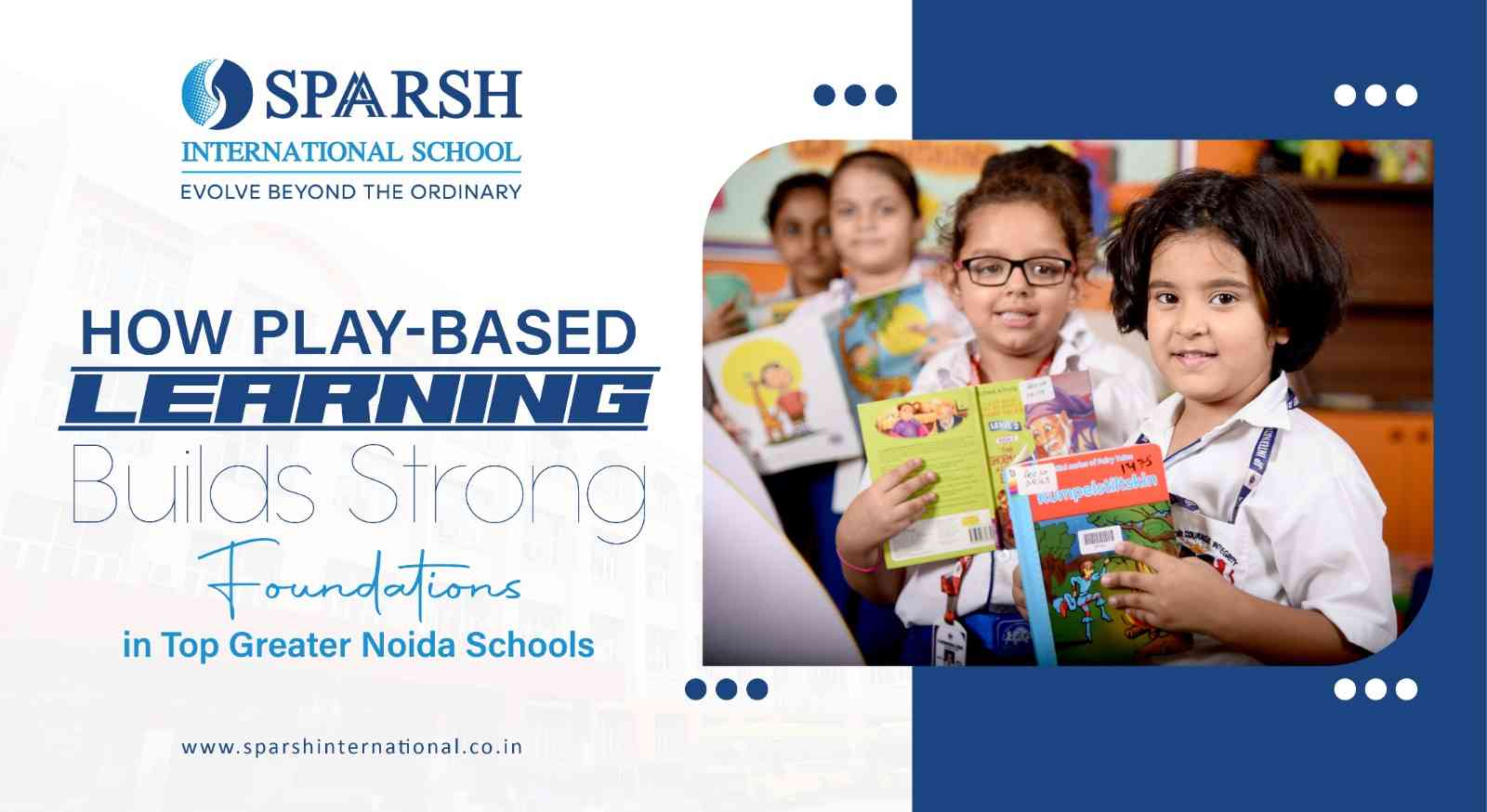
At Sparsh International School, we’ve made this the heart of our early years routine. It’s the engine that drives the learning, not just a treat for Friday afternoon.
You see, academic knowledge isn’t worth much if a child can’t play well with others or handle a bit of disappointment. Play is the perfect 'low-stakes' rehearsal for real life. If a child loses a game, they learn to manage that sting of frustration in a safe environment. They learn to negotiate, to share the 'good' crayons and to settle their own tiffs without a grown-up jumping in every five seconds.
The idea that you have to choose between play and real academics is a bit of a false choice, really. We blend them. Maths comes to life when you're sorting coloured stones or spotting patterns in a game. Science happens when a child is elbow-deep in a water trough, figuring out why some things float and others sink. Even literacy starts with play—recognising the labels in their pretend shop or the letters in their own name during a game of hide-and-seek.
It is the question every parent asks: ‘But will they be ready for the real school later on?’ The evidence suggests that children from play-based learning backgrounds often leapfrog ahead of their peers by the time they reach the upper primary years—an approach followed by many progressive CBSE Schools in Greater Noida.
Because they build a deeper understanding rather than surface-level memory, these children are more curious and significantly more confident. They don’t just know the answer; they know how to find it. Early academic pressure often creates a fear of being wrong, which remains the biggest handbrake on meaningful learning.
Doing this properly requires a huge amount of skill. A teacher has to know exactly when to step in with a clever question and when to just keep quiet and let the discovery happen. It’s about being a keen observer. At SIS, our staff look at how a child plays to understand what they’ve mastered, which tells us far more than a tick-box test ever could.
The transition to 'formal' schooling shouldn't feel like a cold shower. As children get older, play just evolves into projects and hands-on experiments. The spirit of discovery stays exactly the same; only the puzzles get a bit more complex.
Ans: There's no universal magic age for this transition because children develop at individual rates. Most educational experts suggest maintaining strong play elements through age seven or eight. However, this doesn't mean sudden abandonment of play-based methods afterwards. The transition should happen gradually as children demonstrate readiness for abstract thinking and formal instruction. Some students benefit from play-based approaches even in later primary years for certain subjects. Rather than focusing on a specific age, watch for developmental indicators. Can your child sit and focus for extended periods? Do they show interest in letters, numbers and reading? Have they developed strong social skills through play? These signs suggest readiness for more structured learning whilst still incorporating playful elements. Schools should individualise this progression rather than applying rigid age-based transitions.
Ans: Supporting play-based learning at home requires creativity more than expensive resources. Simple household items become learning tools with imagination. Empty boxes transform into castles or spaceships. Kitchen utensils serve as measuring tools for water or rice play. Card games teach Mathematics through counting and strategy. Reading together and then acting out stories develops literacy and creativity simultaneously. The key is following your child's interests and asking questions that extend their thinking. Instead of providing answers immediately, encourage problem-solving by asking 'what do you think would happen if' or 'how could we figure this out together'. Limit screen time to create space for active, imaginative play. Outdoor exploration costs nothing but offers tremendous learning opportunities. Most importantly, resist the urge to structure every moment. Children need uninterrupted time to develop their own play scenarios and work through challenges independently.
Ans: Play-based learning is a child-centred teaching approach where structured activities, games and hands-on experiences are used to develop academic, social, emotional and cognitive skills. It encourages children to learn naturally through exploration, creativity and problem-solving rather than relying solely on traditional classroom instruction.
From Stress to Strength Promoting Mental Health in the Classroom
Parent's Checklist: Finding the Perfect School in Greater Noida
Creating a Supportive Environment Understanding the Role of Counsellors in CBSE Schools
Importance of Education for All Round Development of Children
Positive and Negative Effects of Social Media on Education
Fostering Critical Thinking Skills in CBSE Classrooms


 Student Login